
—The Centre of the Business
A business can have many places where people find it: a social media page, a Google listing, a WhatsApp number, a flyer, a referral, a shared post, a logo on a profile or a few images of past work. All of those things can help people notice the business, but they do not always help people understand it. They may show that the business exists, but they do not always give people one clear place to learn what the business does, how it works and why it should be trusted. That is where a website becomes important.
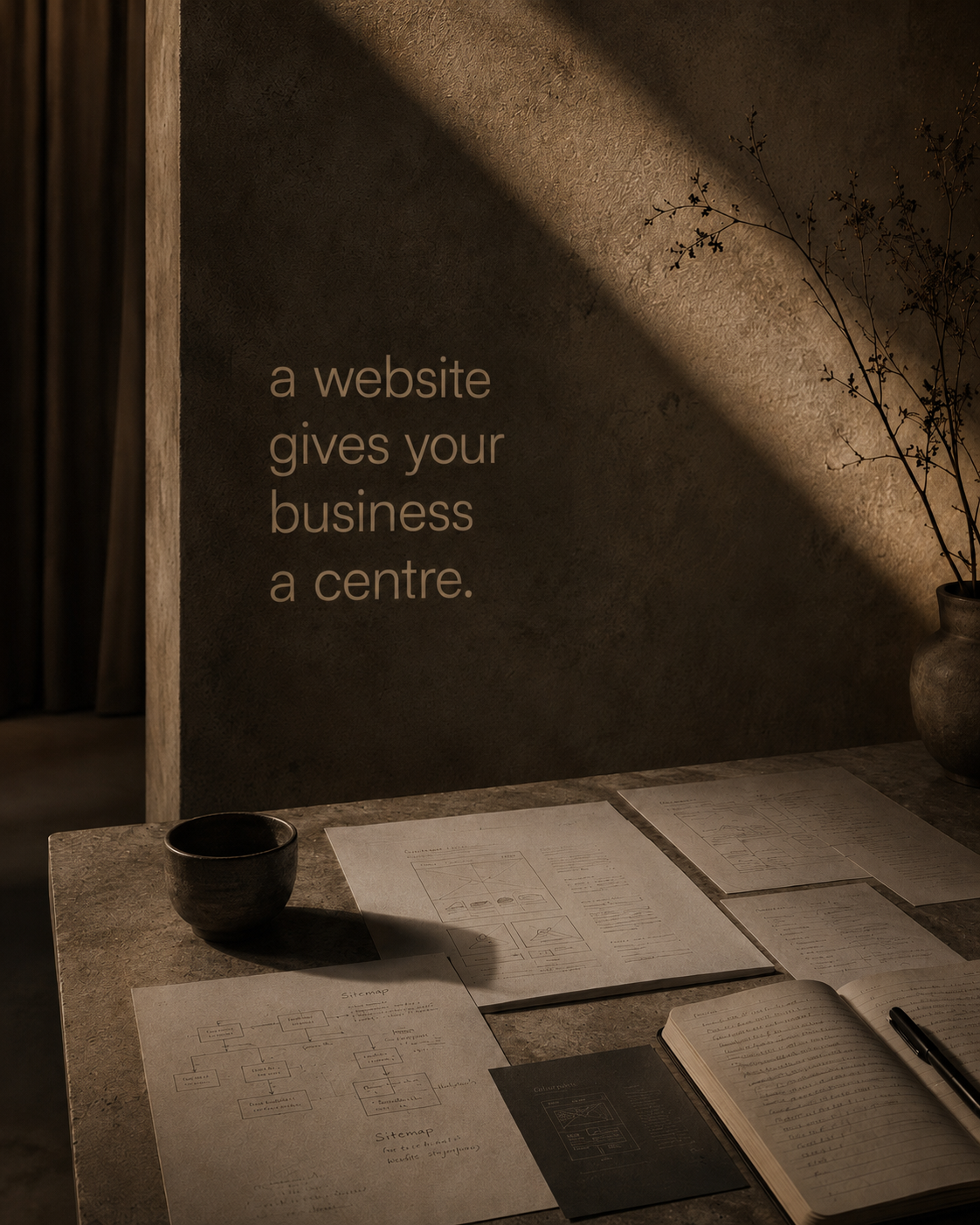
A website gives your business a centre. It gives people one clear place to go when they want to understand who you are, what you do, how you work and whether your business feels like the right fit for them. It brings the important parts of your business together instead of leaving people to piece everything together from different platforms, old posts, saved stories, screenshots, PDFs or scattered messages. A professional website helps your business feel more structured, more considered and easier to trust.
A website gives your business a centre.
—Why a Website Matters
This matters because people rarely make decisions from one small piece of information. Before they call, book, enquire or buy, they usually look for some form of reassurance. They want to know that the business is real, active and credible. They want to see what is being offered and whether the way the business presents itself matches the quality it claims to provide. A website helps give them that reassurance by putting the right information in one place and making the business easier to understand.
A business without a website is not necessarily invisible. People may still know about it through referrals, social media, word of mouth or previous work. But without a proper website, the business can be harder to understand and harder to trust. That does not mean the business is bad. It simply means the audience has to do more work before they feel confident enough to take the next step.
—When Clarity Takes Too Much Work
When people have to work too hard to understand what you offer, many of them will not ask for clarity. They will move on. They may choose the business that explained itself better, looked more current or made the next step easier. That is the quiet risk of not having a website. It is not always obvious, but it can affect how people see the business and whether they decide to enquire.
When people have to work too hard to understand your business, many of them will not ask for clarity. They will move on.
—Social Media Is Not the Centre
A good business website does not need to be complicated. It does not need to be filled with unnecessary features, overdesigned pages or language that only marketing people understand. It needs to be clear. It needs to explain the business properly, show people what they can expect and make the next step easy. For many small businesses, service providers and growing companies, a website is often the first place where the business starts to feel more established.
Social media is useful, but it is not the same as a website. Social media helps people discover a business, but it is not always the best place for them to fully understand it. Posts move quickly, important information gets buried and platforms change constantly. A profile may show activity, but it does not always explain the business clearly. Your website gives you more control because you decide how the message is structured, how the services are explained and how people move from curiosity to enquiry.
Social media can create attention. A website gives that attention somewhere to land.
—The Cost of an Outdated Website
This is especially important when people are comparing options. A potential customer may look at your business and two or three others before making a decision. In that moment, your website becomes part of the way they judge you. They may not think about it deeply, but they notice whether the site feels current, whether the information is clear, whether the business looks active and whether the experience feels professional. A website can either make the decision easier or create doubt before a conversation has even started.
An outdated website can create the wrong impression. Sometimes a company has grown, improved or changed, but the website still looks like an older version of the business. The services may no longer be accurate, the images may feel old, the writing may not explain things well or the design may not work properly on a phone. The site may feel slow, clumsy or forgotten. That disconnect can weaken the way people see the brand because a strong business can look smaller than it really is, a premium service can feel average and an active company can seem inactive.
An outdated website does not only look old. It can make the business feel forgotten.
—When the Website No Longer Fits
This is why a website redesign can be important. Redesigning a website is not just about making it look newer. It is about making sure the website still represents the business properly. Sometimes that means improving the words. Sometimes it means updating the images, making the services easier to understand or rebuilding the whole site because the old version no longer fits where the business is going. A website should grow with the business, because as the company changes, the way it presents itself online should change too.
—Being Found Starts With Being Clear
A professional website also helps people find your business online. When someone searches for a service, they are usually already looking for help, answers or options. A clear website gives your business a better chance of being found when people are searching for what you offer. This is where website design and search visibility work together, but it does not need to be overcomplicated. At its simplest, search visibility means people can find your business when they search for the kind of service you provide.
If someone searches for a company website, website design, small business website, website redesign or website design in South Africa, your website should give enough clear information to show what your business offers. That does not mean repeating the same words over and over. It means creating useful pages that answer real questions. It means explaining your services in plain language, making sure the site works properly on mobile and giving people helpful information that makes their decision easier.
Good website content should sound like it was written for people, not machines. The goal is not to impress people with complicated wording. The goal is to help the right people understand your business. When that is done well, it supports both the reader and the way your business appears online. A website should not make people feel lost or overwhelmed. It should guide them calmly and give them the information they need without making the experience feel heavy.
—Giving Attention Somewhere to Land
A website also gives your marketing somewhere to lead. A social media post can create interest, a referral can create curiosity and a campaign can create attention. But the website is where that attention should land. It is the place where someone can slow down, read more, understand the offer and decide whether to take the next step. Without a strong website, attention can disappear quickly because someone may see a post, like the idea, search for the business and find very little that helps them move forward.
A clear website gives attention somewhere to go. It helps turn interest into understanding, understanding into trust and trust into action. This does not mean every visitor will become a customer. A website is not magic. But it does give people a better chance of moving forward because it answers questions before they have to ask them, removes some of the doubt and gives them a clearer picture of the business.
—Making the Next Step Easier
For service-based businesses, this is especially valuable. People often want to understand the process before they reach out. They want to know what you do, who you help, what the service includes and whether the business feels right for them. A well-built service page can make that easier. A strong about page can make the business feel more human. A clear contact page can make the next step feel simple.
The goal is not to make the business sound bigger than it is. The goal is to make it easier to understand.
—A Place for the Business to Hold Together
A website is also useful because it gives your business a more permanent place for its thinking, proof and story. Social media content moves fast. A post may perform well for a day or two and then disappear into the feed. Website content can last longer. An article, service page or case study can continue to work after it is published because it can be shared, searched, revisited and used to support conversations with potential clients.
That is one of the reasons a website is so important for brand building. It gives your business depth beyond the latest post. It gives people access to your services, your point of view, your work, your process and your story in one place. A business website is not only about having a page online. It is about giving the business structure and creating a clearer path between being noticed and being chosen.
—The Question for Every Business
For businesses that do not have a website yet, the first step is not to build something massive. The first step is to build something clear. A simple, well-written, well-designed website is far better than a complicated site that says very little. The website should answer the questions people are already asking and explain the business in a way that feels honest, useful and easy to follow.
For businesses that already have a website, the question is whether the website still reflects the company properly. Does it still feel current? Does it explain the services clearly? Does it work well on mobile? Does it make the business look trustworthy? Does it support the kind of clients, customers or opportunities the business wants to attract? If the answer is no, the website may be holding the business back quietly.
People may not tell you that the website made them hesitate. They may not say that the information felt unclear. They may not explain that another business simply felt easier to trust. They may just leave. That is why the quality of a website matters. It shapes the decision before the conversation begins.
—A Centre People Can Trust
A website gives your business a centre because it gathers everything into one place: the message, the services, the proof, the story, the contact details and the next step. It creates a clearer experience for people who are trying to understand whether your business is right for them. In a busy market, that clarity matters because people are surrounded by choices, comparing businesses quickly and looking for signs that they can trust what they see.
Your website does not need to be loud. It does not need to chase every trend. It does not need to say more than necessary. But it does need to give people a clear place to understand your business. Being seen is not the same as being understood. Being followed is not the same as being trusted. Being online is not the same as having a centre.
A website gives your business that centre. It gives your audience somewhere to land, somewhere to learn and somewhere to decide. And when it is done well, it becomes one of the most important parts of how your business is experienced online.
Narrative. Changes. Everything.